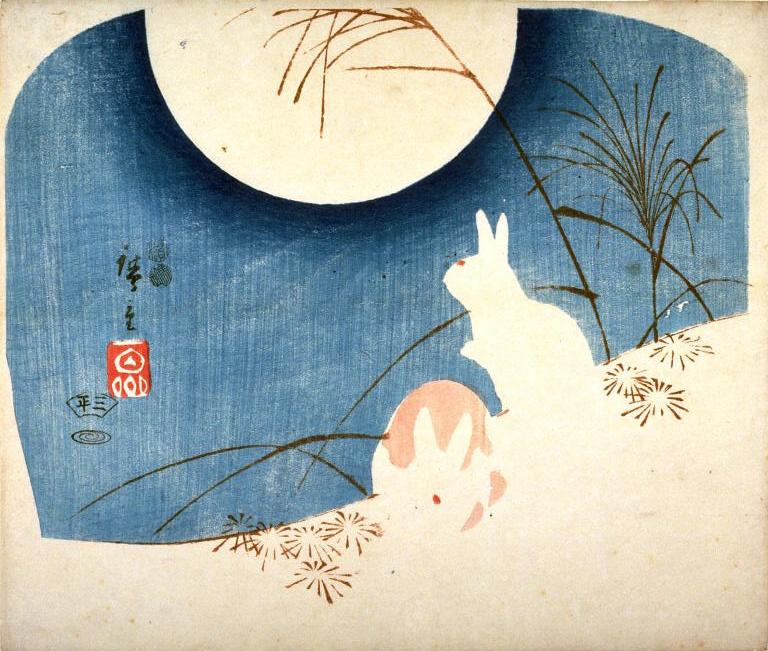
September, the month of the autumn equinox
In September, the sun is a second time in the year on the intersection between the celestial equator and the ecliptic, 6 months after the spring equinox. At that moment, it is located in front of the constellation of Virgo, it has just left that of Leo.
The equinox days are the only two days of the year on which the Sun rises exactly to the east and sets exactly to the west... all over the Earth. Day and night have the same duration.
In 2026, the autumn equinox occurs on September 23 at 00:05.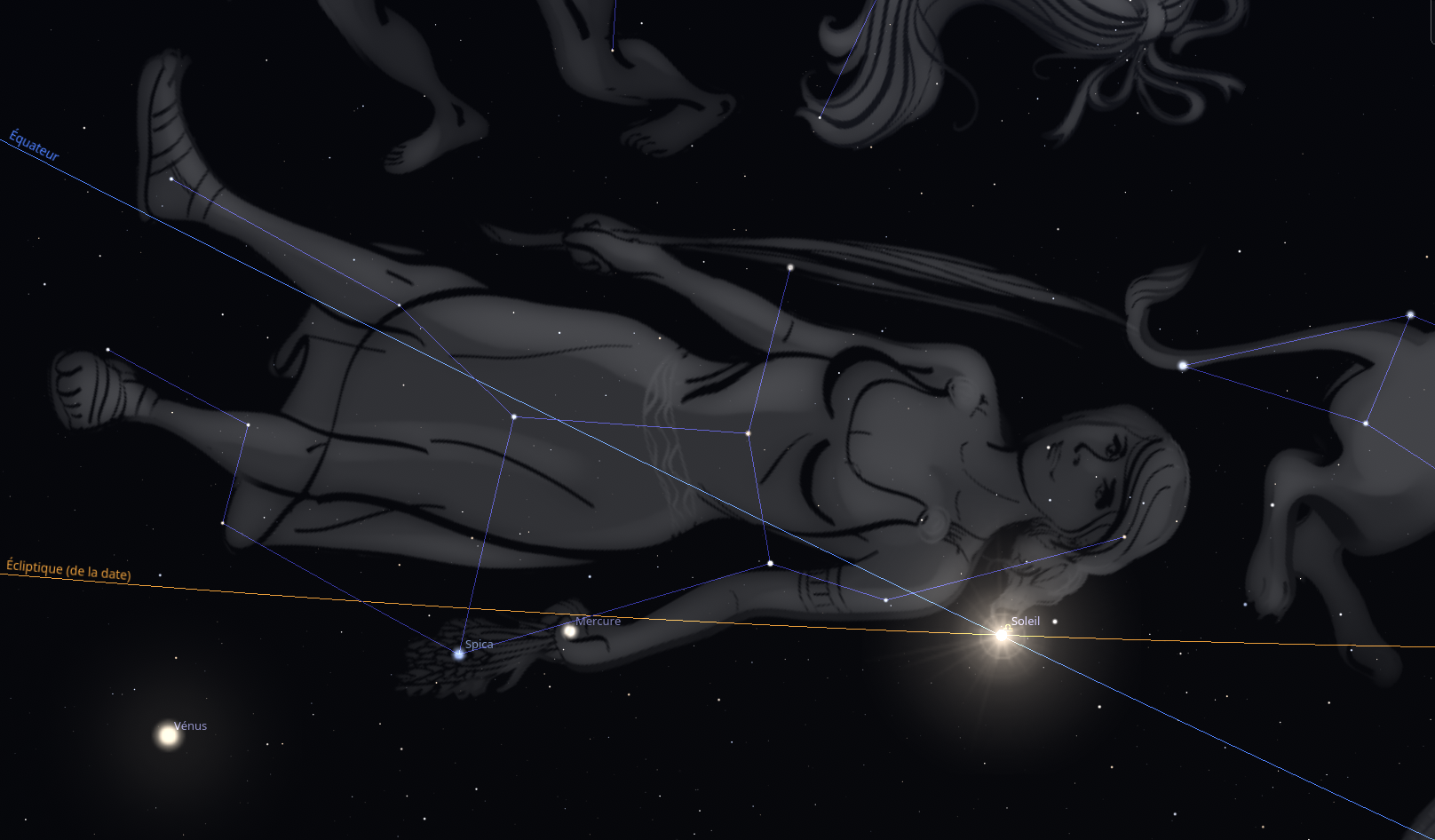
In the sky
- The sun is at the beginning of the month in front of the constellation of Leo and in front of that of Virgo at the end of the month.
- On September 4, Venus is at its aphelion (maximum distance from the Sun) at 0.72823 au*. Its orbit is about 3/4 of the Earth’s orbit, averaging 0.72 au*.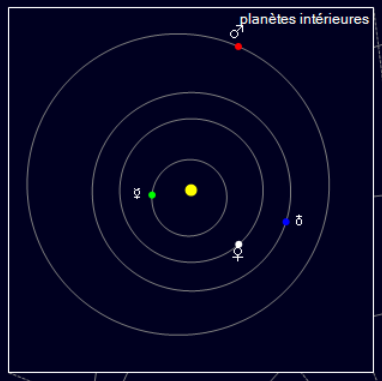
- On September 21, Venus – again ! - reaches its greatest brightness (magnitude of -4.60) and will then continue to move closer to the Sun, still visible in the West for a few days at dusk.
- On September 26, Neptune will be in opposition to the Sun, the best time to observe it... but with a telescope : we can’t see this planet with the naked eye. Its position was calculated independently by the British astronomer John Couch Adams in 1843 and the French astronomer Urbain Le Verrier in 1846, and it was finally observed for the first time on 23 September 1846 by the Prussian astronomer Johann Gottfried Galle.
The same day, the full Moon will come to steal the show in front of the constellation of Pisces, not far from Saturn as well.
*au: astronomical unit
The Earth’s orbit is on average 1 au from the Sun (the reference), or 149,597,887 km, almost 150 million kilometers.
September, the month of the Mid-Autumn Festival
- In China, the 3,000 year old Mid-Autumn Festival or Moon Festival, 中 秋 节 (Zhongqiūjié), falls on the 15th day of the eighth lunar month, the night of the full moon. In 2026, it takes place on Friday, September 25.
It is a time of reunion with friends and family, where we give thanks for the autumn harvests and pray for longevity and prosperity and also admiration for the full moon. Mooncakes are the iconic dish of this holiday, often offered as gifts to family, friends and colleagues.
This festival is linked to the legend of the archer Houyi and his beloved Chang'e, who became goddess of the moon. Chang'e’s faithful companion is a white rabbit.
- In Japan, this same festival is called "Tsukimi", and has as its symbol a white rabbit from an old legend, different from the Chinese one.